Click on the session titles to watch each recording!
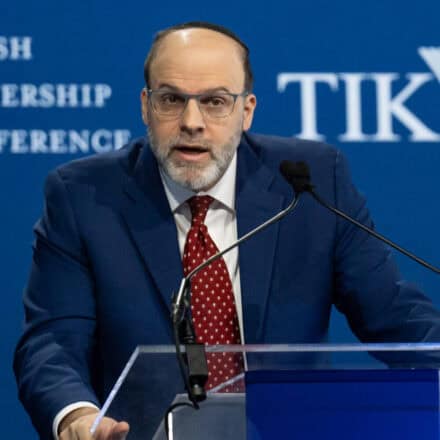
Opening Remarks
Eric Cohen
In his framing remarks at the Jewish Leadership Conference, Tikvah CEO Eric Cohen explores the meaning and importance of the Jewish Fight for America. Arguing that “America needs the Jews as much as the Jews need America,” he makes the case that those who attack the Jews ultimately oppose the West’s Hebraic roots, the American commitment to human excellence, and very ideas of national sovereignty and the free society. And when we Jews stand tall for ourselves, we also defend all that is best in America and do our part to preserve the American experiment for future generations.
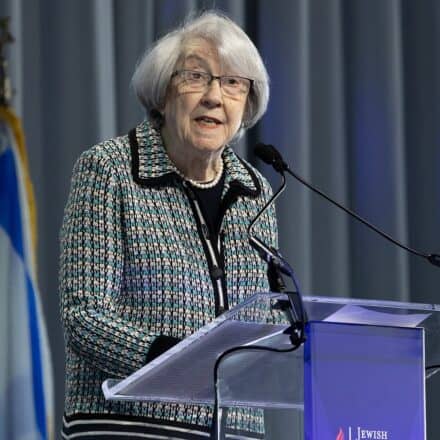
How the Jews Remain an Eternal People
Professor Ruth Wisse
Enduring through the ages of the Egyptians, the Babylonians, the Greeks, the Romans, and up to the present day, the Jews are history’s undying people. Somehow the family of Abraham and Sarah grew into a nation that has outlasted the mighty kingdoms and empires of every age. What have been the strategies of Jewish endurance throughout history? And what does the modern political condition of Jewry in both Israel and America mean for the Jewish fight for survival? In this stirring address, Professor Ruth Wisse—a Harvard professor emerita and 2021 Herzl Prize laureate—makes the case that Jews are done running, and that the time has come for a new and confident Jewish politics of responsibility.
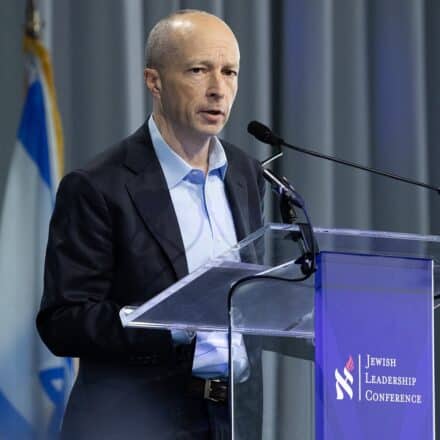
The Hebraic Road to American Renewal: From a Jewish Prophet
Dr. Yuval Levin
Roughly 2,500 years ago, a Jewish member of the Persian royal court left his station to return to Jerusalem and lead his people in rebuilding what had once been their ancient capital. The story of Nehemiah offers a template for our own age. Many Americans—including growing numbers of American Jews—sense that we are living in a time of transition. One era of American history is coming to a close, and we must fight to preserve the way of life that our fathers made possible for us, even as we must also reform and establish new American institutions. In this moment of declining social trust and emboldened anti-Semitism, one of American conservatism’s leading thinkers looks to our biblical past in search of a path toward national and religious rejuvenation.
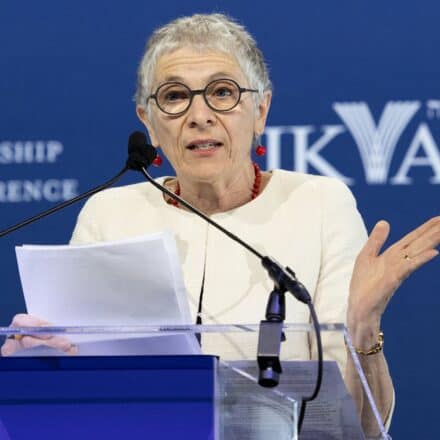
The Onslaught Against the Jewish World
Melanie Phillips
We all looked with horror at the scenes that recently came out of Amsterdam—in which a modern-day pogrom overtook the streets of one of Europe’s most cosmopolitan capitals. But the anti-Semitic outburst in the Netherlands did not arise out of nowhere. Melanie Phillips has spent years analyzing the situation of Europe’s Jews. Here, she offers her bracing conclusions about the situation facing the Jewish diaspora, and whether civilized Europe can be saved from the scourge of Jew-hatred.
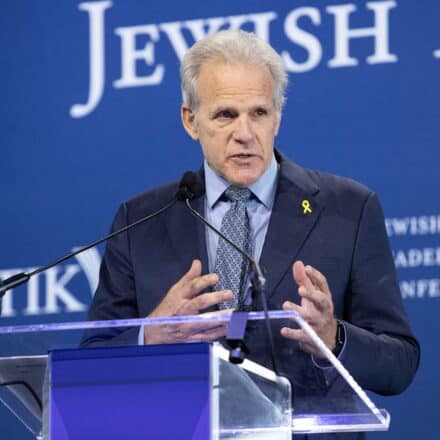
1948 Is the Jewish Condition: The War to Renew Jewish Sovereignty
Amb. Michael Oren
What other war is Israel’s confrontation against Iran and its proxy forces most like? Is it like the Six-Day War of 1967, in which Israel confronted multiple coordinated Arab armies simultaneously? Is it like the Yom Kippur War of 1973, which took place fifty years nearly to the day before the Hamas attacks of October 7? Former Israeli Ambassador to the United States and distinguished historian Michael Oren argues that the attitude and strategic ambition of Israel’s adversaries make Israel’s 1948 War of Independence the most apt comparison to the current conflict. Then, as now, Israel’s enemies aspire to more than border adjustments and land swaps: they desire the eradication of Jewish sovereignty in the land of Israel altogether. And that means that the ultimate aim of the current war is nothing less than the reaffirmation of Jewish independence.
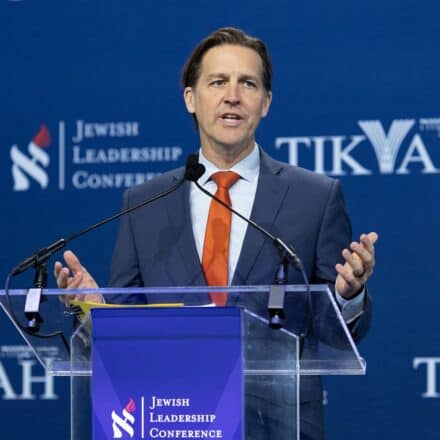
2024 Herzl Prize Address
The Honorable Dr. Ben Sasse
In this learned and wide-ranging address, 2024 Herzl Prize laureate Dr. Ben Sasse discussed the four ongoing revolutions changing the face of society: in technology and economics, consciousness and attention, politics, and education. He offered his thoughts on why this post-October 7 moment presents us with an opportunity to return education to its grandest, humane, and soul-forming aspirations, and how doing so can help America build a healthier society for all of its citizens—Jews and non-Jews alike.
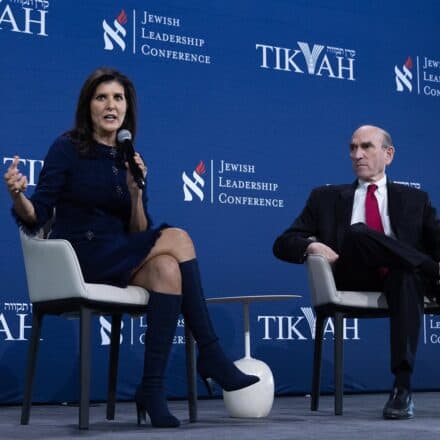
America, Israel, and the New Politics of the Middle East
Amb. Nikki Haley in Conversation with Hon. Elliott Abrams
Events in the Middle East are unfolding at a rapid pace, with Israel’s multi-front war against its enemies changing the face of the region. As the Trump administration prepares to take the helm, it will confront a new and unprecedented array of challenges and opportunities. In conversation with Middle East expert and Tikvah Chairman Elliott Abrams, former U.N. ambassador Nikki Haley analyzes the fall of the Assad regime in Syria, the state of the U.S.-Israel alliance, how best to confront the Iranian regime, and the causes of anti-Israel activism in America.
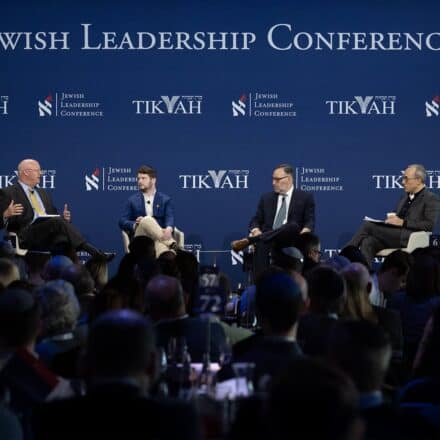
The Campus Battles: What Really Matters and What Comes Next
Kenneth Marcus, Dr. William Inboden, and Shabbos Kestenbaum in Conversation with Dan Senor
The American academy has long harbored hostile attitudes toward the Jewish state and the American experiment, and our schools and universities have recently become ground zero in the battle of ideas over Zionism and America’s longstanding support of Israel. In this lively conversation, author and Call Me Back podcast host Dan Senor speaks to higher education leader Dr. William Inboden, Jewish rights advocate and lawyer Kenneth L. Marcus, and Tikvah alumnus and leading Jewish student activist Shabbos Kestenbaum about the future of higher education and the intellectual, philanthropic, and political blueprint for returning America’s universities to their highest purposes.
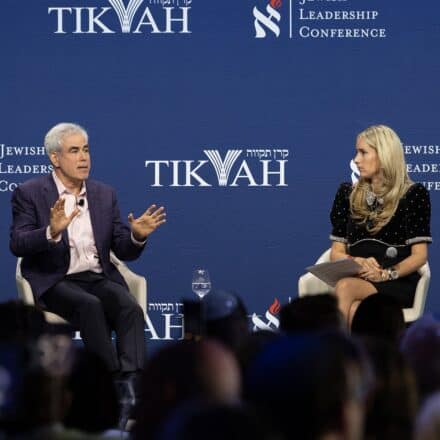
The Soul of America’s Children: Faith, Community, and the Future of the Anxious Generation
Dr. Jonathan Haidt in Conversation with Caroline Bryk
In his groundbreaking book, The Anxious Generation, Jonathan Haidt exposed how a new “phone-based childhood” was causing an epidemic of anxiety and despair among children and young adults. But what societal shifts lay at the root of this tech-induced crisis? Through his recent work with the Jewish Parents Forum and the Jewish community more broadly, Dr. Haidt has begun to focus on the ways that the decline of strong communities—especially religious communities—warps the process of moral formation and exposes children to the worst dangers of modern technology. In conversation with JPF’s executive director, Caroline Bryk, Dr. Haidt explores what faith-based communities can bring to the effort to provide kids with a more humane childhood. Dr. Haidt and Ms. Bryk will discuss how Jewish schools have been leading the way in crafting better tech policies for students, showing that Jews can make a national impact by providing a blueprint for other communities struggling with these questions.
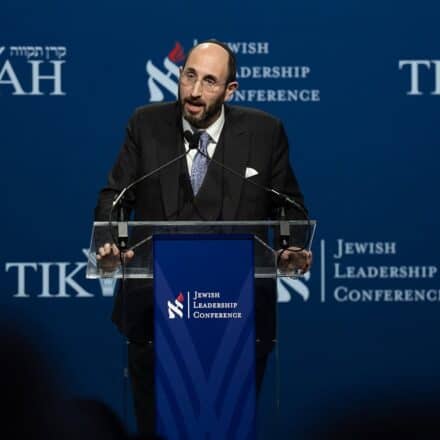
The Beginning of American Jewry’s Golden Age
Rabbi Dr. Meir Soloveichik
We have all been unnerved by the rise in anti-Semitism in America over the last year. But are the frequently-heard laments about the end of American Jewry’s “golden age” true? Jews once aspired to assimilate into America’s melting pot, hollowing out their distinctive identity along the way. But over the last year, we have witnessed countless Jews respond to our post-10/7 world with a resurgence of Jewish courage, commitment, and confidence, a more unabashed Zionism, and a thirst for a Jewish faith more deeply rooted in tradition. Rabbi Dr. Meir Soloveichik reflects on this important shift in the Jewish community (exemplified in many ways by the evolution of Jewish comedian Jerry Seinfeld) and ask whether American Jewry’s best days are actually ahead of us.