
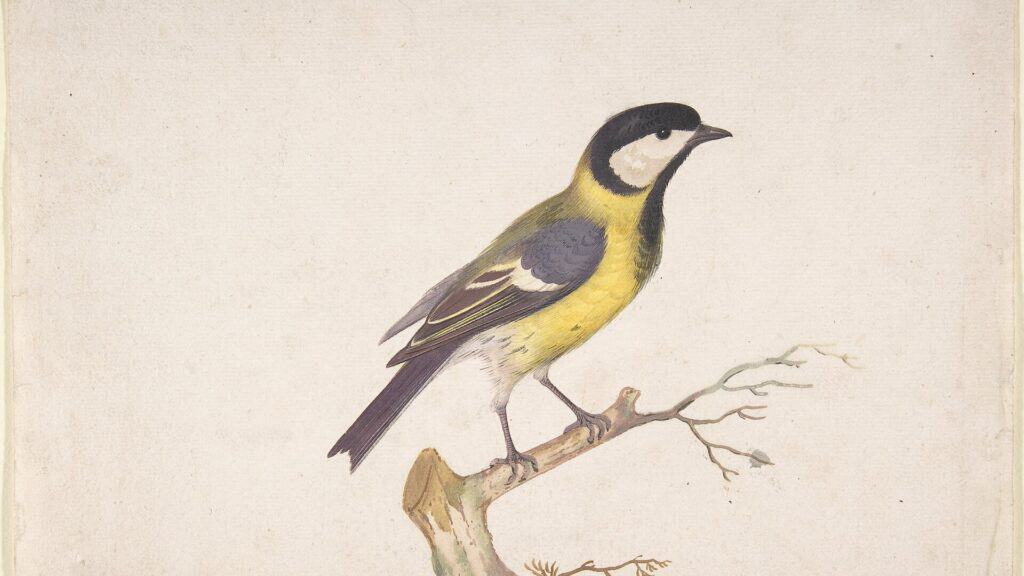
The following statistics describe a single hobby: 37% of Americans engage in it, it had a total economic output of $279 billion in 2022, and it has a dedicated lobbying group that has existed for 121 years, named for a man born in Haiti in 1785. One is unlikely to guess that these stats describe birdwatching (the Haitian is French-American naturalist, John James Audubon). This prolific predilection for ornithological investigation has a wondrous impact on the human psyche.
A recent scientific study suggests many mental benefits to birdwatching. When learning a new skill, one’s brain undergoes neuroplasticity, a process in which neural pathways are reorganized and strengthened, forming new pathways related to the skill. Birding has proven to be a uniquely powerful element in improving neuroplasticity. In a recent study in The Journal of Neuroscience, both novice and expert birders underwent MRIs where each group had to identify various birds. The experts obviously fared better, but the researchers were shocked by the increased density and greater amount of structure seen in the birder’s brains in areas of spatial awareness, object recognition, and working memory. They concluded that these structures likely lessen the impacts of aging on the human brain and could even significantly lower the risk of memory diseases such as Alzheimer’s.
The biological impact of birding on the brain pales in comparison to the emotional impact. Renowned modern birder, David Allen Sibley, author of the authoritative The Sibley Guide to Birds, attests to this impact, saying,
“The fundamental appeal of birding, I believe, is that it offers us a connection to that [natural] world. Birding is the activity that motivates us to go outside and provides a touchstone to make the connection, the reward is simply being out there to experience nature.”
This idea is echoed by many birders who value the connection with nature that comes with birding; as President Theodore Roosevelt—an avid birder—said: “Spring would not be spring without bird songs, any more than it would be spring without buds and flowers.”
In the thick of the Covid pandemic, my family was often outdoors in Central Park; after encountering odd collections of people staring at birds, we eventually took an interest in birding ourselves. Birding in Central Park, as we quickly discovered, is dominated by older retirees looking for serenity away from the bustling city. Since then, my bird-watching interest has waxed and waned (usually seasonally, with over 200 species to see in Central Park during peak migration periods). However, since I began birding, several aspects of the activity have added to its allure for me.
The first allure is the necessity to embrace the unknown. One of the hardest aspects of birding is accepting when you are unsure of what you saw. Maybe the bird was too far, or maybe it was too fast, or maybe it was too quiet. But accepting that the unknown will endure forever leads one to detach themself from the need for conclusion.
Birding also cultivates an appreciation for the natural world within the observer. Through birding, I periodically found myself marveling at the beauty and, quite often, the sheer diversity of life found on earth. I observed the contrast between a hummingbird (the size of my two fingers, zipping from flower to flower, sucking up nectar, and preparing to migrate thousands of miles under its own power) and a stately heron (strutting through a lake, seizing fish in one fell swoop). By viewing this great diversity, one recognizes the beauty in nature’s variety and begins to appreciate not just the majesty of the natural world but the diversity of life in this paradigm.
Furthermore, the act of sitting and watching birds captures the beauty in a journey without an end goal. Often, I go birding in the hopes of seeing a particular species (like the biological Class Aves) or a certain number of species. However, when birding in the off-season, I know there are fewer species to find and have little hope of spotting something rare. In these moments, I find myself examining and appreciating the regular birds with newfound interest. In this way, I gain the ability to appreciate my environment as it is, even the simple omnipresent components in it.
Through my birding experience, I have developed many skills that are sorely lacking in many of my generation. Skills like waiting, learning to live without instant gratification, and teaching oneself to enjoy a journey separate from the destination can all be gained through birding. They say that patience is a virtue, but it’s hard to cultivate in an era of screens, reels, and Instagram stories. The solace that I find in birding is a feeling that every person should hope to experience at some point in their life. Experiencing the wonders of the natural world while enmeshed in the atmosphere of New York City is truly an incomparable feeling.