
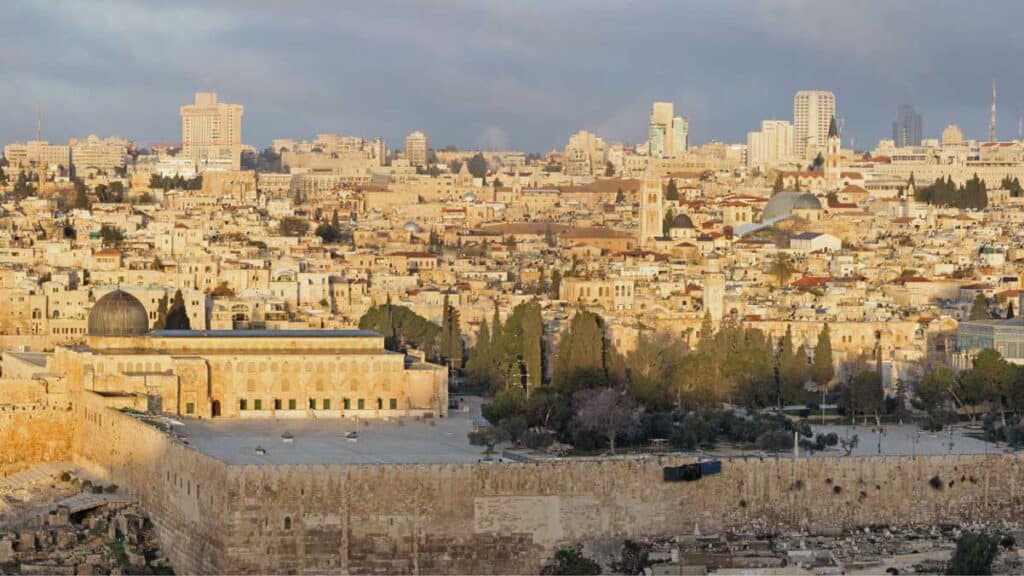
Jerusalem versus Athens. Faith versus Reason. Science versus Religion. The narrative is always the same: opposing philosophies too different to ever synthesize. Often, the impression one gets is that they must choose between the two. Athens claims that knowledge comes from reason and skepticism, while Jerusalem places its trust in a higher order beyond human understanding. And because Jerusalem cannot be proven in the same way as Athens, it is often dismissed.
Yet, there are moments where these systems of knowing intersect, and, as the Rambam argued, true wisdom comes not from choosing between them, but using Jerusalem and Athens together in harmony. Over the last century, as science has advanced exponentially, certain discoveries have supported stories in the Tanakh. It begs the question: what if science has been quietly proving the Torah right all along?
For centuries, the rise of science felt like the slow erosion of religious belief. The Enlightenment elevated reason and skepticism as the highest order of understanding and dismissed anything that could not be empirically verified. People were forced to make a choice: logic or belief. Darwin’s theory of evolution contradicted Genesis, and Freud called religion “a collective illusion.” When the French philosopher Pierre-Simon Laplace was asked by Napoleon where God was in his model of the universe, he famously replied, “I have no need of that hypothesis.” For centuries, people relied on God as the answer for the mysteries in this world, but when those mysteries had answers in science, belief in God became obsolete. Science was not competing with religion; it was replacing it.
Despite this, there is reason to believe that science does not contradict, but explains the awesome events described in the Torah. One such example is in Genesis, when Lot and his family flee Sodom. They are commanded not to look back, but not everyone can resist the temptation:
“Lot’s wife looked back, and she thereupon turned into a pillar of salt” (Genesis 19:26).
Today, a salt pillar lies on Har Sedom, long identified with this account. The Roman-Jewish historian Flavius Josephus was the first to claim to have seen it himself, writing of the episode:
“But Lot’s wife continually turning back to view the city as she went from it, and being too nicely inquisitive what would become of it, although God had forbidden her so to do, was changed into a pillar of salt; for I have seen it, and it remains at this day” (Antiquities of the Jews, Book 1, Chapter 11).
Beyond this physical evidence of this event, there are also scientific parallels to the next part of the story. After they escape the miraculous divine destruction, Lot and his daughters run to the hills and huddle in a nearby cave. The Dead Sea is surrounded by some of the longest salt caves in the world, aligning with the Torah.
More significantly, a 2021 study published in Nature Scientific Reports identified a cosmic airburst that occurred in Jordan around 3,600 years ago. A cosmic airburst is when a meteoroid or comet enters Earth’s atmosphere and disintegrates, producing intense heat and shockwaves. This heat can vaporize surrounding materials, releasing sulfur-bearing minerals from the meteorite—literal “fire and brimstone.” This is exactly how the Torah describes the destruction saying:
“GOD rained upon Sodom and Gomorrah sulfurous fire from GOD out of heaven” (Genesis 19:24).
Both the scientific paper and the Torah speak of the same event through different lenses. One through a more miraculous view, and the other scientific.
Another instance when science has proved the Torah is the most famous set of miracles: the Ten Plagues. They are often dismissed as scientifically impossible, yet when examined closely, can be understood through a chain of natural events. Research by epidemiologists John S. Marr and Curtis Malloy, along with Duncan Hoyte, suggest that the plagues may have begun with a bloom of dinoflagellates, microorganisms known for causing “red tides” that discolor water and kill aquatic life. According to the study, this caused the frogs to leave the Nile. Consequently, lice and gnats (specifically the Culicoides species) took over the lands. The fourth plague (wild beasts) included swarms of insects, and epidemiologists identified stable flies as the most likely species that attacked the Egyptians. Diseases caused by the stable flies and gnats could have then spread to the cattle. When the flies bit humans, they resulted in boils. The seventh, eighth, and ninth plagues were a hailstorm, locust swarm, and dust storm, respectively, all common natural events at the time in Egypt. Even the death of the Egyptian firstborns has been interpreted through naturalistic causes. In ancient Egyptian society, oldest sons were often given priority access to food. If that food had been contaminated by toxins produced during earlier ecological disruptions, they would have been the most exposed. Once again, science does not disprove the events of the Torah; it provides a possible mechanism for them.
Make no mistake, to explain is not to diminish. Explanation does not remove wonder, and the same is true today. Miracles are happening all around us. The danger in becoming too focused on the how is that we forget to ask why. Right now, it is important to notice the miracles around us; even if they can be scientifically proven, they are still miraculous. True wisdom, as the Rambam understood, is knowing that Jerusalem and Athens are not contradictory. Science and faith are both tools to see the world more clearly—a reminder that understanding how does not replace asking why.