

Tikvah Advanced Institute: Statesmanship in the Silicon Age (January 24–26, 2027, NYC)
Artificial intelligence and emerging technologies are transforming the foundations of economic power, military competition, diplomacy, and governance. At the center of this transformation, advanced computing and the infrastructure that enables it are becoming increasingly important sources of economic, military, and geopolitical power. Nations are competing for technological advantage, private companies increasingly command capabilities once associated primarily with states, and advances in artificial intelligence are beginning to reshape warfare, institutions, and the international balance of power.
These developments raise questions that are technological in origin but fundamentally political in character: What constitutes national power in the age of AI? How should free societies compete while preserving liberty? What is the proper relationship between governments and increasingly powerful technology companies? And what qualities of judgment and leadership will statesmen need in an age of accelerating technological change?
The Tikvah Advanced Institute on Statesmanship in the Silicon Age will bring together a select group of emerging leaders for an intensive three-day exploration of these questions. Rather than approaching artificial intelligence primarily as a technical subject, the Institute will examine technological transformation through the traditions of history, political thought, and statesmanship. Drawing on thinkers and statesmen from Thucydides and Machiavelli to Hamilton, Tocqueville, Churchill, and Kissinger, participants will consider how enduring principles of power, strategy, political order, and human judgment can illuminate the challenges confronting leaders today.
Through the close study of classical texts, contemporary case studies, and intensive discussion, the Institute will explore the changing foundations of national power, technological competition among great powers, the growing geopolitical role of technology companies, and the implications of emerging technologies for warfare and world order. Particular attention will be given to what these transformations mean for America, Israel, and the West, and to the central question animating the Institute: What does wise statesmanship require in the Silicon Age?
The Institute is intended for a select group of graduate students, young professionals, and emerging leaders in public policy, national security, technology, and related fields. No technical background is required.
By invitation only.

Ofir Zigelman is a technology executive and researcher whose work focuses on the intersection of artificial intelligence, geopolitics, and world order. Prior to his work in the technology sector, he served for approximately a decade in Israel’s national security community, including as a commander in Unit 8200 and in the Prime Minister’s Office. He serves as a Visiting Scholar at the University of Cambridge’s Centre for Geopolitics, where his research examines how emerging technologies are reshaping the foundations of national power, international order, and statecraft through an applied history lens.
Professionally, he leads work on global cloud and artificial intelligence infrastructure, providing firsthand insight into the development and deployment of technologies that increasingly shape economic competitiveness, military capability, and geopolitical influence. His experience across national security, applied historical research, and global technology infrastructure provides a distinctive perspective on how enduring principles of statecraft can inform leadership during periods of profound technological transformation. By bringing together history, political philosophy, geopolitics, and practical experience, this seminar seeks to help prepare the next generation of political leaders for an era in which technology is becoming a central determinant of national power.
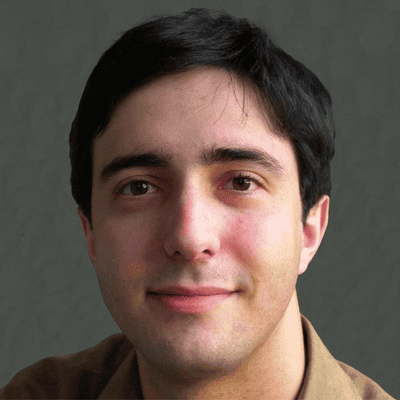
John-Clark Levin is the head of research for Ray Kurzweil, Google’s chief futurist from 2012-2025 and one of the world’s foremost authorities on artificial general intelligence (AGI). At Kurzweil Technologies, John-Clark leads foresight and metrology about timelines and roadmaps to AGI, and studies approaches for keeping broadly superhuman systems safe and under human control. He also runs ongoing analysis of emerging AI applications for STEM research, especially in fields including biomedicine, materials science, and humanoid robotics. This work was featured in Kurzweil’s The Singularity Is Nearer, which became an instant New York Times bestseller. He is also the senior adviser for AI at Greenmantle, Sir Niall Ferguson’s macrostrategy advisory firm, and regularly advises governments, Fortune 500 corporations, and NGOs such as the Tony Blair Institute for Global Change. For the past 16 years, John-Clark has studied AI and its impacts at Claremont, Harvard, and Cambridge, and also serves as a Yorktown Institute fellow, and an advisor to the brain-computer interface company Subsense BCI. John-Clark has lectured at dozens of institutions including Georgetown University, RAND, and the Centre for the Study of Existential Risk—and his commentary has appeared in numerous publications such as the Wall Street Journal, TIME Magazine, and MIT Technology Review. In personal pursuits, John-Clark constructs crossword puzzles for the New York Times, writes acclaimed humor for McSweeney’s, and performs stage magic as former president of the Cambridge University Magic Society. He is also a Jeopardy! alum, and a 2018 champion of the BBC’s University Challenge.