Advisory Council
The Tikvah Academic Fellowship is honored to have selected elite professors from its network to serve on the Advisory Council. The role of the Advisory Council is primarily to offer ideas and feedback, on an informal and virtual basis, to decisions relating to the key components of the program: assisting Fellows with academic articles or book manuscripts to be accepted for publication, mentorship and community formation, and speaking at the annual academic conference.

Jed Atkins
Jed Atkins is the Director and Dean of the School of Civic Life and Leadership and Professor of Civic Life and Leadership at the University of North Carolina at Chapel Hill, where he has served since March 2024 as the inaugural leader of this new academic initiative. Previously, he spent fifteen years at Duke University, where he was director of the Civil Discourse Project, chair of the classical studies department, and associate professor of philosophy and political science. Professor Atkins specializes in Greek and Roman political and moral philosophy, the history of political thought, and contemporary debates on tolerance, civility, and civil discourse. He is the author of Roman Political Thought (Cambridge University Press, 2018) and Cicero on Politics and the Limits of Reason: The Republic and Laws (Cambridge University Press, 2013), and editor, with Thomas Bénatouïl, of The Cambridge Companion to Cicero’s Philosophy. His forthcoming book, The Christian Origins of Tolerance, will be published by Oxford University Press in October 2024. He holds an M.Phil. in Political Thought and Intellectual History and a Ph.D. in Classics from the University of Cambridge, and an A.B. in Government and Classics from Bowdoin College.
Leora Batnitzky
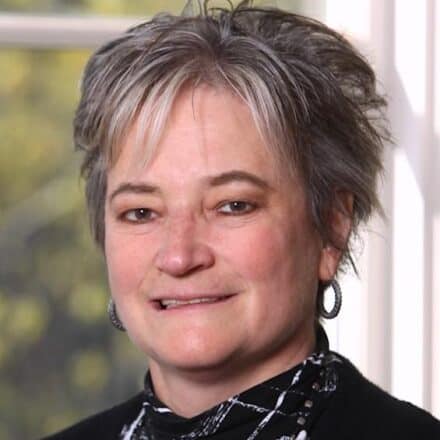
Leora Batnitzky is the Professor of Religion and the Ronald O. Perelman Professor of Jewish Studies at Princeton University, where she specializes in philosophy of religion, modern Jewish thought, and hermeneutics. She received Princeton’s President’s Award for Distinguished Teaching in 2002. She is the author of Idolatry and Representation: The Philosophy of Franz Rosenzweig Reconsidered (Princeton, 2000), Leo Strauss and Emmanuel Levinas: Philosophy and the Politics of Revelation (Cambridge, 2006), and How Judaism Became a Religion: An Introduction to Modern Jewish Thought (Princeton, 2011). She is currently completing Ecclesiastes: A Biography for Princeton University Press and working on books about conversion controversies in Israel and India and about Edith Stein. Professor Batnitzky is co-editing The Princeton Companion to Jewish Studies and has co-edited several volumes including The Book of Job: Aesthetics, Ethics and Hermeneutics and Institutionalizing Rights and Religion. She is co-editor of Jewish Studies Quarterly and co-director of the International Center for Bible, Culture, and Modernity. She holds a Ph.D. from Princeton University and dual B.A. degrees from Barnard College and the Jewish Theological Seminary of America.

Justin Cammy
Justin Cammy is Professor of Jewish Studies and World Literatures at Smith College, where he serves as chair of both programs and also holds appointments in Middle East Studies, Russian and East European Studies, and Translation Studies. A literary and cultural historian of Yiddish, his teaching and research explore modern Jewish literature and history, with a focus on Yiddish and Jewish American writing, Holocaust testimony, and the history of Zionism. His critical edition and translation of Abraham Sutzkever’s From the Vilna Ghetto to Nuremberg received the 2022 Leviant Prize from the Modern Language Association, and he is currently co-editing The Cambridge History of Yiddish Literature and a multilingual edition of the interwar journal Yung-Vilne. He has held fellowships at institutions including Cambridge, Michigan, Rutgers, Yad Vashem, and UCLA. At Smith, he also co-directs the STRIDE research program and is a member of the Faculty Council (2024–27). He holds a Ph.D. and A.M. from Harvard University and a B.A. from McGill University.

Yehuda Halper
Yehuda Halper is a Professor in the Department of Jewish Philosophy at Bar-Ilan University and recipient of the Alon Fellowship for Outstanding Young Researchers in Israel. His research examines medieval and renaissance Jewish philosophy and the dynamic confluence of Arabic, Greek, Latin, and Hebrew intellectual traditions, which led to the blossoming of the sciences in medieval Jewish culture and to the reinterpretation of canonical religious texts. He currently directs a research project on Aristotelian dialectic in Hebrew funded by the Israel Science Foundation and has organized research groups at the Israel Institute for Advanced Studies and the Maimonides Centre for Advanced Studies at the University of Hamburg. Raised in Athens, Georgia, he studied mathematics and classics at the University of Chicago before making aliyah to Israel, where he completed his M.A. at Hebrew University and Ph.D. at Bar-Ilan University, and taught at Tulane University before returning to Bar-Ilan.

Jacob Howland
Jacob Howland is the Dean of UATX’s Intellectual Foundations program, which comprises the first two years of the undergraduate curriculum. He studies ancient Greek philosophy, history, epic, and tragedy; the Hebrew Bible and the Talmud; Kierkegaard; and literary and philosophical responses to the Holocaust and Soviet totalitarianism. Previously, Howland served as McFarlin Professor of Philosophy at the University of Tulsa and Senior Fellow at the Tikvah Fund. He is the author of Glaucon’s Fate: History, Myth, and Character in Plato’s Republic (2018); Plato and the Talmud (2011); Kierkegaard and Socrates: A Study in Philosophy and Faith (2006); The Paradox of Political Philosophy: Socrates’ Philosophic Trial (1998); and The Republic: The Odyssey of Philosophy (1993). He has edited A Long Way Home: The Story of a Jewish Youth, 1939-1948 (2005). Howland has published articles in various journals including Review of Metaphysics, Review of Politics, American Political Science Review, Holocaust and Genocide Studies, and Polis, and his work has appeared in The New Criterion, City Journal, and The Nation, among other publications. He received his Ph.D. from Pennsylvania State University and his B.A. from Swarthmore College.
Jonathan Karp
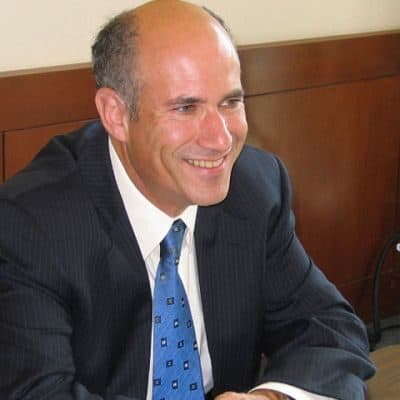
Jonathan Karp is an Associate Professor of History and Judaic Studies at Binghamton University. His research interests cross the boundaries between Jewish intellectual, cultural and economic history. His work explores both the roles Jews have played in modern economic life and the images and stereotypes that have accompanied them. His first book was The Politics of Jewish Commerce: Economic Thought and Emancipation in Europe (2008). He is currently completing a study of cultural relations between American Jews and African Americans, entitled Chosen Surrogates: How Blacks and Jews Transformed Modern American Culture. He is also the editor of numerous volumes – The Cambridge History of Judaism in the Early Modern World (2017), with Adam Sutcliffe, and World War I and the Jews (2017) with Marsha L. Rozenblit. From 2010-2013 he served as Executive Director of the American Jewish Historical Society. He holds a BA from Tufts University and both an MA and PhD from Columbia University.

Vincent Phillip Munoz
Vincent Phillip Muñoz is the Tocqueville Professor of Political Science and Concurrent Professor of Law at the University of Notre Dame. He is also the Founding Director of ND’s Center for Citizenship & Constitutional Government. Under his leadership the programs have raised more than $20,000,000 in grants, gifts, and pledges. Dr. Muñoz writes and teaches across the fields of constitutional law, American politics, and political philosophy with a focus on religious liberty and the American Founding. He won a National Endowment for the Humanities fellowship to support his most recent book, Religious Liberty and the American Founding: Natural Rights and the Original Meanings of the First Amendment Religion Clauses (2022), published by the University of Chicago Press. Articles from the project have appeared in American Political Science Review, The Harvard Journal of Law and Public Policy, Notre Dame Law Review, American Political Thought, and the University of Pennsylvania’s Journal of Constitutional Law. Dr. Muñoz is a noted expert on the political philosophy of the American Founding and, in particular, James Madison. His most recent publications have explored the Founders’ understanding of religious establishments and, with his former student Kate Hardiman Rhodes, how the modern Supreme Court has reconceived what an establishment of religion is. He holds a B.A. from Claremont McKenna College, an M.A. from Boston College, and a Ph.D. from Claremont Graduate School.

Rabbi Jacob J. Schacter
Rabbi Dr. Jacob J. Schacter is the University Professor of Jewish History and Jewish Thought and senior scholar at the Center for the Jewish Future at Yeshiva University. From 2000 to 2005, he served as dean of the Rabbi Joseph B. Soloveitchik Institute in Boston, and from 1981 to 2000, he served as rabbi of The Jewish Center in Manhattan. He was a teaching fellow at Harvard from 1978-1980, director of Yeshiva University’s Torah u Madda Project from 1986-1997, and an adjunct assistant professor at the Stern College for Women at Yeshiva University from 1993-1999. He is the co-author of A Modern Heretic and a Traditional Community: Mordecai M. Kaplan, Orthodoxy, and American Judaism (with Jeffrey Gurock, 1996) and the editor of Jewish Tradition and the Nontraditional Jew (1992) and Judaism’s Encounter with other Cultures: Rejection or Integration? (1997). He has published numerous articles and reviews in Hebrew and English and is the founding editor of the Torah u-Madda Journal. Rabbi Schacter holds a Ph.D. in Near Eastern Languages from Harvard University and received rabbinic ordination from Mesivta Torah Vodaath.

Avi Shilon
Avi Shilon is a lecturer in history at the Columbia University Institute for Israel and Jewish Studies. He has been the Visiting Scholar and Israel Institute Fellow at the Taub Center for Israel Studies at New York University, as well as a postdoctoral fellow at the Ben-Gurion Research Institute for the Study of Israel and Zionism at Ben-Gurion University of the Negev, Israel, and at Tsinghua University, China. He is the author of The Decline of the Left-Wing in Israel: Yossi Beilin and the Politics of the Peace Process (2020), Ben-Gurion: His Later Years in the Political Wilderness (2016), and Menachem Begin: A Life (2012). His articles have appeared in Middle Eastern Studies, The Jewish Quarterly Review, and Middle East Journal, and he is a contributor to Yedioth Ahronoth (YNet). Dr. Shilon earned his Ph.D. from Bar-Ilan University, Israel.
Ruth Wisse
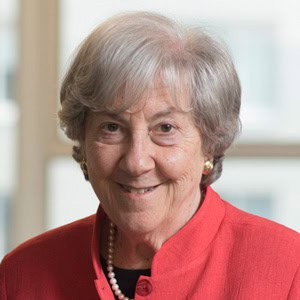
Ruth Wisse is the Martin Peretz Professor of Yiddish Literature and Comparative Literature Emerita at Harvard University and a Distinguished Senior Fellow at Tikvah. One of the foremost scholars of Jewish literature and political thought, she has devoted her career to illuminating the richness of Jewish cultural life and examining the moral and political challenges confronting the Jewish people in the modern world. Her major literary works include The Modern Jewish Canon: A Journey through Literature and Culture (2003), The Glatstein Chronicles (2010), A Little Love in Big Manhattan (1988), The I.L. Peretz Reader, The Best of Sholom Aleichem, A Shtetl and Other Yiddish Novellas, and The Penguin Book of Modern Yiddish Verse. Her scholarship encompasses both close readings of modern Yiddish fiction and broader reflections on Jewish identity, cultural transmission, and literary tradition. Wisse has also authored two influential works of Jewish political analysis: If I Am Not for Myself: The Liberal Betrayal of the Jews (1992) and Jews and Power (2007). Her latest book, No Joke: Making Jewish Humor (Princeton University Press), part of Tikvah’s Library of Jewish Ideas series, explores how Jewish wit and irony function as both cultural expression and coping mechanism. She holds a B.A. and Ph.D. from McGill University and an M.A. from Columbia University.