
Summer Course Offerings
(Registration form is at the bottom of the page)
Please review our course offerings for the summer. Each course will meet three times, and classes will each be an hour and fifteen minutes. When you are ready to register, scroll to the bottom of the page and fill out the registration form. If you have any questions about the courses, please email Irina Rakhlis at irakhlis@tikvah.org.
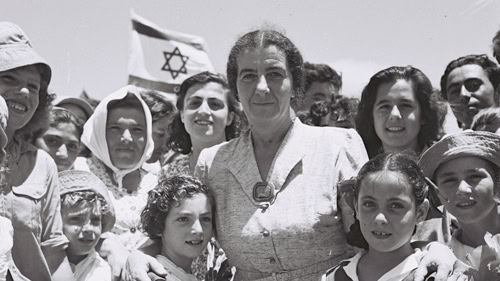
Women of Valor: Inspiring STRENGTH and RESILIENCE
Sarah Rindner & Ariel Levenson
3 Date/Time Options Offered:
July 8–10 | Monday, Tuesday, Wednesday | 10–11:15 AM ET
or July 29–31 | Monday, Tuesday, Wednesday | 7–8:15 PM ET
or August 5–7 | Monday, Tuesday, Wednesday | 10-11:15 AM ET
In this course we will learn about the lives and contributions of three heroic Jewish women who served the Jewish people in different and outstanding ways. Together we will explore the historical context in which Sarah Schenirer, Hannah Senesh and Golda Meir lived and the challenges each faced. We will read first-person texts that give insight into their respective thought processes and passions. And we will evaluate the impact of their strength and resilience on the Jewish people and the world at large. Along the way, we will also explore the questions of what heroism looks like, and how we might also demonstrate bravery to meet the challenges of our own time.
Sarah Rindner
Sarah Rindner taught English Literature at Lander College for Women prior to making aliyah with her family in 2019. She writes frequently on Jewish and literary topics and is a regular contributor to Mosaic Magazine and the Jewish Review of Books. She has degrees in English Literature from Stern College and Columbia University and studied for a year at Midreshet Lindenbaum.

Ariel Levenson
Ariel Horn Levenson is the middle School principal at Joseph Kushner Hebrew Academy (JKHA) in Livingston, New Jersey, where she also teaches American history. In her ten years at JKHA, she pioneered the school’s Mentoring Program, built the middle school advisory program, and spearheaded the school’s NJAIS Accreditation Self-Study committee. Prior to her tenure at JKHA, she was the Middle School English Chair at The Dalton School in New York City. In addition to her love of teaching, Ariel is also a writer who published her first novel with HarperCollins in 2004 and her first children’s book with Macmillan in 2020. As a teacher, she strives to push herself outside her comfort zone, re-inventing curriculum and collaborating with her colleagues to elevate the level of academic discourse. Ariel earned her B.A. from the University of Pennsylvania and her M.A. from NYU. She lives in Livingston, NJ with her husband and three children.

HONOR: The American Spirit in the Modern Era
Anne Continetti & Ariel Levenson
3 Date/Time Options Offered:
July 8–10 | Monday, Tuesday, Wednesday | 7–8:15 PM ET
July 29–31 | Monday, Tuesday, Wednesday | 10–11:15 AM ET
or August 26–28 | Monday, Tuesday, Wednesday | 10–11:15 AM ET
What does it mean to be honorable in America in the Modern Era? Where can we see examples of honor in our public servants and citizenry? In this course, students will use three primary sources to examine the idea of honor and how it is demonstrated by members of our political class and by American citizens. Students will gain knowledge about three different eras: World War Two, the Cold War, and the War on Terror, while practicing close-reading skills to analyze a text. Through these close readings, students will discover how the American spirit encourages us to live an honorable life.

Anne Continetti
Anne Continetti is currently a faculty member at St. Albans’s School of Public Service, a summer program for rising seniors in high school. Previously, she was a history teacher at St. Albans School in Washington, D.C. and the Madeira School in McLean, Virginia. She worked as a curriculum consultant designing common-core-aligned lesson plans to accompany the What So Proudly We Hail curriculum, and her lesson plan for Martin Luther King Jr.’s “I Have a Dream” speech was featured on www.sharemylesson.com. Mrs. Continetti graduated from Washington University in St. Louis with a degree in History and received her Master’s in Education from The George Washington University. Prior to teaching, Mrs. Continetti worked as an advance staffer on a presidential campaign and was a political analyst at the American Israel Public Affairs Committee (AIPAC). She is a member of the Board and active in the PTO at her children’s school, Gesher Jewish Day School. Mrs. Continetti lives in McLean, Virginia, with her husband, Matt, and two children.
Ariel Levenson
Ariel Horn Levenson is the middle School principal at Joseph Kushner Hebrew Academy (JKHA) in Livingston, New Jersey, where she also teaches American history. In her ten years at JKHA, she pioneered the school’s Mentoring Program, built the middle school advisory program, and spearheaded the school’s NJAIS Accreditation Self-Study committee. Prior to her tenure at JKHA, she was the Middle School English Chair at The Dalton School in New York City. In addition to her love of teaching, Ariel is also a writer who published her first novel with HarperCollins in 2004 and her first children’s book with Macmillan in 2020. As a teacher, she strives to push herself outside her comfort zone, re-inventing curriculum and collaborating with her colleagues to elevate the level of academic discourse. Ariel earned her B.A. from the University of Pennsylvania and her M.A. from NYU. She lives in Livingston, NJ with her husband and three children.

The Bold & Courageous: Women in Tanakh
Rachel Besser
2 Date/Time Options Offered:
July 8–10 | Monday, Tuesday, Wednesday | 6–7:15 PM ET
or July 22–24 | Monday, Tuesday, Wednesday | 6–7:15 PM ET
The heroines of the Hebrew Bible distinguish themselves in stories of faith, intrigue, and courage. In this class, we will explore the experiences and inner worlds of three such women: Miriam, Ruth, and Esther. We will delve into each woman’s respective story and its enduring resonance through the centuries and millennia. Miriam, the sister of Moses, played a pivotal role in the liberation of the Jewish people, while displaying wisdom and fortitude that sustained them during their journey through the wilderness. Ruth, our second heroine, was a Moabite widow who became the symbol of kindness, unwavering loyalty, and resilience as she left her home to join the Jewish people. Finally, Esther, a Jewish queen in a Persian world, found herself in a position to save her people from impending destruction.

Rachel Besser
Rachel Besser is a teacher and department chair at the Frisch School where she teaches Bible and Jewish philosophy. A graduate of Stern college, Rachel received her Masters from Hunter College in English Literature. She lives with her husband and children in Clifton NJ.

George Orwell’s Animal Farm
Dovid Schwartz
2 Date/Time Options Offered:
July 22–24 | Monday, Tuesday, Wednesday | 6–7:15 PM ET
or August 19-21 | Monday, Tuesday, Wednesday | 6-7:15 PM ET
In this course, we will read Animal Farm by George Orwell. Animal Farm is a simple story about farm animals who rebel against their farmer in a failed attempt to create a better society. It is also a profound criticism of Joseph Stalin and 20th century Russia. We will spend three sessions carefully reading the book and discussing what motivated the animals, where they went wrong, and what the farmer could have done better. Animal Farm is a rare book. You can first read in middle school and spend the rest of your life thinking about it.

Dovid Schwartz
Dovid Schwartz teaches a Great Books course at Heichal Hatorah Yeshiva High School in New Jersey. He graduated from Yeshiva University having majored in Philosophy and minored in Jewish Studies. Before college, Dovid learned at Yeshivat Kerem b’Yavneh and Yeshivat Har Etzion. He has been the recipient of several fellowships from organizations including the Henry Salvatori Center, Hertog Foundation, and Tikvah Fund. Dovid currently lives in Teaneck, New Jersey, with his wife and daughter and he plans on pursuing a career in law.
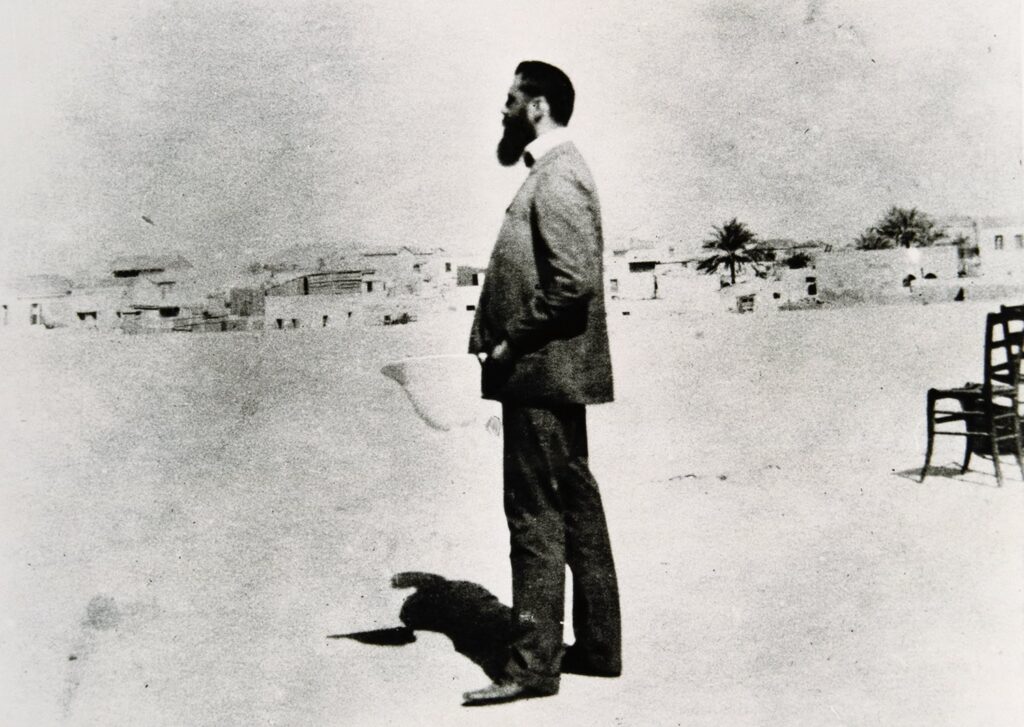
The Re-Birth of Jewish NATIONALISM: How the Zionist Story Began
Daniel Gutkind
2 Date/Time Options Offered – This Course Meets Once-Per-Week, Over Three Weeks:
July 7, 14, and 21 | Sundays | 10:00 AM–11:15 AM ET
or August 4, 11, and 18 | Sundays | 10:00 AM–11:15 AM ET
Zionism has been defined as “Jewish nationalism,” but what does this phrase mean? And how exactly should the “Jewish” element be combined with the “national” one? Cultural Zionists and political Zionists have debated these questions since the movement began in the 19th century, and Israel’s political schisms today reflect these arguments. In this course, we will read and discuss texts by Theodor Herzl, Ahad Ha’am, and Rabbi Tzvi Yehuda Kook in order to understand each writer’s position. Herzl and Ahad Ha’am were early Zionists whose opposing visions set the tone for the Jewish state, which Rabbi Tzvi Yehuda Kook’s vision has shaped in the past decades. Our aim will be to understand the goals of these Zionist thinkers and how each understood the meaning of Jewish nationalism, and seek to understand their writings in their original context as well as how each reverberates today.

Daniel Gutkind
Daniel Gutkind graduated with honors from the University of Chicago, where he studied Economics and Fundamentals: Issues and Texts. He received the Jamie Redfield Award for Excellence in Fundamentals, awarded to the student who has earned the highest honors scholastically in the Fundamentals program. Daniel has taught and co-taught courses for the Tikvah Online Academy on Zionist intellectual history, money and morality, and the American economy. He has also led Tikvah reading groups at the University of Chicago and Oxford.

CURIOSITY Crossroads: Unveiling Mysteries in Midrash and Sherlock Holmes
Joshua Leavitt
2 Date/Time Options Offered:
July 15–17 | Monday, Tuesday, Wednesday | 6–7:15 PM ET
or August 19–21 | Monday, Tuesday, Wednesday | 6-7:15 PM ET
Although we don’t tend to think of curiosity as a virtue, let alone a Jewish one, at its heart it is an admirable inclination toward learning that seems to be as much about the desire and the process as it is about the outcome. To understand why this trait should be valued, we will read foundational tales about curiosity from the Talmud and Hebrew Bible alongside classic detective stories featuring the legendary sleuth Sherlock Holmes. We will consider how modes of interpretation in midrash compare with methods of investigation in mysteries. By getting curious about curiosity, we will come to understand it as a Jewish ideal.

Joshua Leavitt
Joshua Leavitt cultivated a passion for literary study and philosophical conversation at the Bronx High School of Science and The University of Chicago, then received a PhD in American literature at Ohio State. He has created meaningful learning experiences for middle school, high school, college, and continuing education students on subjects ranging from the history of detective fiction to Jewish American historical fiction and beyond. Presently, he helps create intellectual and regional engagement opportunities at UChicago Alumni in Chicago, IL.

How to Argue Politics in America: Right, Left, and Center
Kevin Schultz
2 Date/Time Options Offered:
July 30–August 1 | Tuesday, Wednesday, Thursday | 7–8:15 PM ET
or August 6–8 | Tuesday, Wednesday, Thursday | 7-8:15 PM ET
The U.S. is perhaps more polarized than it has been since the American Civil War. There are plenty of indicators suggesting this is true—political disagreements, religious affiliations, and class identity. The polarization extends into our own personal lives as well—from conversations with your uncle at Thanksgiving, and even to your choice in music and social media platforms. This course will examine the sources of this polarization—focusing on the history of the disputes—and potential resolutions. What institutions have Americans invented to work around our disagreements so that we can all aspire toward the ideals instilled in our nation since its founding?

Kevin Schultz
Dr. Kevin M. Schultz is currently Chair of the Department of History at University of Illinois Chicago. An award-winning historian, Prof. Schultz has published widely and excelled as a public intellectual, academic, and teacher. His most recent book, the winner of the Robert F. Lucid Award from the Norman Mailer Society, examines the fascinatingly intertwined lives of right-wing firebrand William F. Buckley, Jr. and left-wing radical Norman Mailer as a way to better understand the 1960s. Buckley and Mailer: The Difficult Friendship That Shaped The 1960s (W.W. Norton & Co.) came out in June 2015, was an Amazon.com #1 New Release in US History, and was reviewed widely. A distinguished teacher, Prof. Schultz has won several major awards for his teaching, including the Teaching Recognition Award from the Council for Excellence in Teaching and Learning at UIC twice and the 2012-13 Shirley A. Bill Award for Excellent Teaching, an award selected by UIC History faculty, graduate students, and majors. Prof. Schultz is also the author of HIST, a popular college-level textbook of American history, now in its fifth edition (Cengage Learning, 5th ed. 2018).

Israel in Song and Symbol
Rabbi Mark Gottlieb
August 5–7 | Monday, Tuesday, Wednesday | 7–8:15 PM ET
Supporting Israel in these difficult times is not just a matter of making the best arguments or offering the right reasons—although it is certainly that too! But, above all, the closest bonds of family and friendship, natin and people, are just as significantly drawn from the arena of our emotions and affections, our loves and loyalties. And the best way to cultivate that love and loyalty is to experience the signs and symbols, the ballads and songs, that make up our intellectual and emotional landscape. In this course, we will study the most important and beloved symbols and songs of the State of Israel—the Israeli Flag and Star of David, HaTikvah, Israel’s National Anthem, and the Menorah, both in its ancient and modern versions. Knowing—and feeling—more about these cherished symbols and songs can deepen our affection for a place and idea we love—now and forever.

Rabbi Mark Gottlieb
Rabbi Mark Gottlieb is chief education officer of Tikvah and founding dean of the Tikvah Scholars Program. Prior to joining Tikvah, Rabbi Gottlieb served as head of school at Yeshiva University High School for Boys and principal of the Maimonides School in Brookline, MA, and has taught at The Frisch School, Ida Crown Jewish Academy, Hebrew Theological College, Loyola University in Chicago, and the University of Chicago. He received his BA from Yeshiva College, rabbinical ordination from the Rabbi Isaac Elchanan Theological Seminary, and an MA in Philosophy from the University of Chicago, where his doctoral studies focused on the moral and political thought of Alasdair MacIntyre. Rabbi Gottlieb’s work has been featured twice in the Wall Street Journal and his writing has appeared in First Things, Public Discourse, SEVEN: An Anglo-American Literary Review, The University Bookman, Tradition Online, the Algemeiner, From Within the Tent: Essays on the Weekly Parsha from Rabbis and Professors of Yeshiva University, and, most recently, Strauss, Spinoza & Sinai: Orthodox Judaism and Modern Questions of Faith. He is a trustee of the Hildebrand Project and serves on the Editorial Committee of Tradition: A Journal of Orthodox Jewish Thought. He lives in Teaneck, NJ, with his wife and family.

The Oldest Hatred Makes a Terrible Comeback: The Fight against Anti-Semitism after October 7th
Rabbi Mark Gottlieb
August 19–21 | Monday, Tuesday, Wednesday | 7–8:15 PM ET
While anti-Semitic acts, especially online, have dramatically spiked during the past decade, nothing could have prepared the Jewish world for what we’ve witnessed since the brutal attacks in Israel on October 7th. What are the roots of this disease of the human heart that afflicts so many today? Is anti-Semitism just a form of prejudice, a fear and loathing of the Other directed against the Jews, or is anti-Semitism, at its core, something overlapping but distinct from the conventional forms of prejudice so many marginalized peoples face? And how do the contemporary forms of anti-Semitism we are now experiencing—in culture, media, and politics—express the ever-changing but always persisting form of evil that we know for so many centuries. Using sources both ancient and taken from today’s headlines, this course will give students new insights into a phenomenon sadly all too familiar to us.
Rabbi Mark Gottlieb
Rabbi Mark Gottlieb is chief education officer of Tikvah and founding dean of the Tikvah Scholars Program. Prior to joining Tikvah, Rabbi Gottlieb served as head of school at Yeshiva University High School for Boys and principal of the Maimonides School in Brookline, MA, and has taught at The Frisch School, Ida Crown Jewish Academy, Hebrew Theological College, Loyola University in Chicago, and the University of Chicago. He received his BA from Yeshiva College, rabbinical ordination from the Rabbi Isaac Elchanan Theological Seminary, and an MA in Philosophy from the University of Chicago, where his doctoral studies focused on the moral and political thought of Alasdair MacIntyre. Rabbi Gottlieb’s work has been featured twice in the Wall Street Journal and his writing has appeared in First Things, Public Discourse, SEVEN: An Anglo-American Literary Review, The University Bookman, Tradition Online, the Algemeiner, From Within the Tent: Essays on the Weekly Parsha from Rabbis and Professors of Yeshiva University, and, most recently, Strauss, Spinoza & Sinai: Orthodox Judaism and Modern Questions of Faith. He is a trustee of the Hildebrand Project and serves on the Editorial Committee of Tradition: A Journal of Orthodox Jewish Thought. He lives in Teaneck, NJ, with his wife and family.
Register for Your Course Below:
Tikvah Online Academy Summer 2024